Page Contents
ToggleThat nagging worry about bone health probably started the moment you heard about someone’s hip fracture or watched a parent struggle with osteoporosis. If you’re between 30 and 60, you’re at the perfect age to take control of your bone health before problems arise. The right bone health supplements can make a significant difference – but only if you know which ones actually work and how to use them properly.
Here’s the truth: your bones are constantly rebuilding themselves, even right now as you read this. Until about age 30, you build more bone than you lose. After that, the balance shifts, and without proper nutrition, you could lose 1% of bone mass yearly. But this isn’t inevitable – science shows us exactly which nutrients can tip the scales back in your favor.
Understanding Bone Health Supplements That Actually Work
Not all bone health supplements are created equal, and throwing random calcium pills at the problem might actually do more harm than good. Your bones need a symphony of nutrients working together, not just one solo performer.
The foundation starts with these evidence-based essentials.
Calcium: The Building Block
Adults need 1,000-1,200mg daily from food and supplements combined. But here’s what most people don’t realize – taking more than 500mg at once reduces absorption. Your body literally can’t process mega-doses efficiently.
Vitamin D3: The Absorption Manager
Without adequate vitamin D, you could consume all the calcium in the world and still have weak bones. Research shows 800-1,000 IU daily helps maintain bone density, with some people needing up to 2,000 IU based on blood levels.
Vitamin K2: The Traffic Director
This overlooked nutrient directs calcium to your bones instead of letting it accumulate in arteries. Studies show 90-120mcg of K2 (specifically the MK-7 form) significantly improves bone density markers.
Magnesium: The Forgotten Partner
About 60% of your body’s magnesium lives in your bones. Without enough (310-420mg daily), calcium can’t properly convert into bone tissue.
Choosing the Right Calcium Supplements
Smart Strategies for Calcium Supplements
Walking down the supplement aisle reveals dozens of calcium supplements, each claiming superiority. Let’s cut through the marketing and look at what science actually supports.
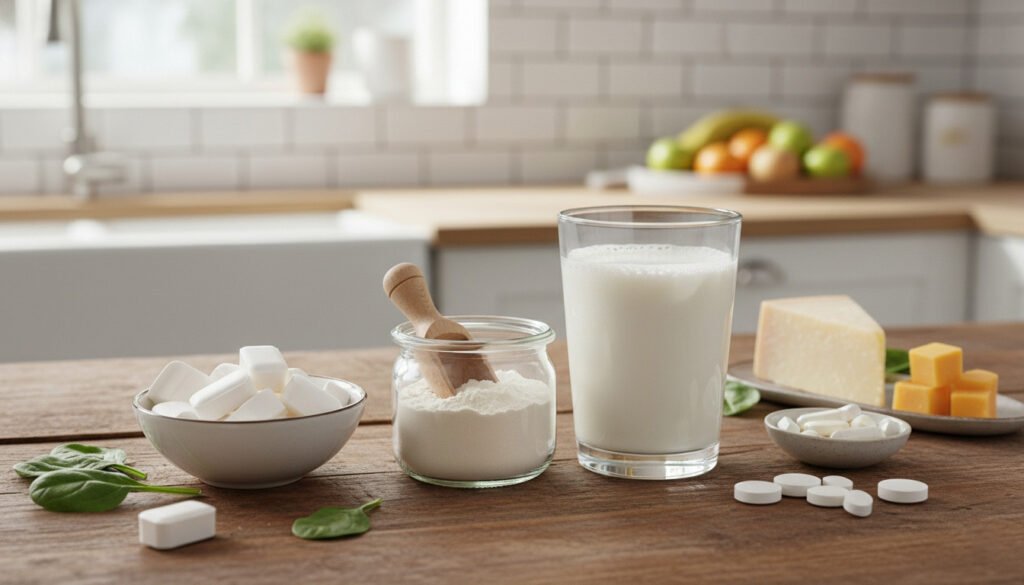
Calcium Carbonate vs. Citrate:
- Carbonate: Most affordable, requires stomach acid for absorption, take with meals
- Citrate: Costs more but absorbs better, especially for those over 50 or taking acid reducers
Optimal Dosing Strategy:
- Split doses into 500mg or less
- Take at different times from iron supplements
- Separate from high-fiber meals when possible
- Consider food sources first, supplement the gap
Forms That Work Best:
- Calcium with vitamin D3
- Calcium citrate-malate
- Microcrystalline hydroxyapatite (MCHC)
Remember, excessive calcium without other nutrients may increase cardiovascular risks. Balance is everything.
If you’re already focusing on bone density but want extra support for cartilage and joint comfort, check out our Joint Genesis Review 2025, where we explore how collagen and hyaluronic acid can help maintain mobility alongside strong bones.
The Critical Role of Vitamin D3
Why Vitamin D3 Changes Everything
The sunshine vitamin deserves its reputation, but most Americans fall short of optimal levels. Vitamin D3 doesn’t just help calcium absorption – it’s essential for bone cell formation and muscle function that prevents falls.
Absorption Optimization
Take with your fattiest meal of the day – vitamin D is fat-soluble and absorption increases by up to 50% with dietary fat.
Dosing Realities
While 800-1,000 IU prevents deficiency, correcting existing deficiency often requires:
- 2,000-4,000 IU daily for maintenance
- Higher doses temporarily under medical supervision
- D3 (cholecalciferol) over D2 (ergocalciferol)
Testing and Targets
Blood levels should ideally sit between 30-50 ng/mL. About 42% of American adults are deficient, with higher rates in:
- Northern climates
- Darker skin tones
- Indoor workers
- Adults over 50

Maximizing Bone Density Naturally
Building Bone Density Beyond Supplements
Improving bone density requires more than popping pills. Think of supplements as support players while lifestyle factors take the leading role.
Exercise That Builds Bones:
- Weight-bearing activities: Walking, jogging, dancing
- Resistance training: Weights, bands, body weight
- Balance exercises: Yoga, tai chi (prevents fractures from falls)
- Aim for 30 minutes most days

Focus on whole foods providing:
- Leafy greens (calcium, K2, magnesium)
- Fatty fish (vitamin D, omega-3s)
- Nuts and seeds (magnesium, healthy fats)
- Fermented foods (K2 from natto, aged cheeses)
Lifestyle Factors That Matter:
- Limit alcohol to 1-2 drinks daily maximum
- Quit smoking (reduces bone density by 2% yearly)
- Manage stress (cortisol weakens bones)
- Maintain healthy weight (too low increases fracture risk)
Effective Osteoporosis Prevention
Starting Osteoporosis Prevention Early
The best time for osteoporosis prevention was in your twenties. The second-best time is today. Whether you’re 35 or 55, proactive steps now significantly impact your future bone health.

Prevention Protocol
Evidence-based strategies include:
- DEXA scan baseline at menopause or age 65
- Annual height checks (loss indicates compression)
- Fall-proofing your home environment
- Regular medication reviews with your doctor
Risk Assessment Reality Check
You’re at higher risk if you have:
- Family history of osteoporosis
- Small frame or low body weight
- History of fractures from minor falls
- Early menopause or irregular periods
- Long-term steroid use
- Autoimmune conditions
For individuals dealing with stiffness or early mobility issues, pairing bone-focused nutrients with joint-supporting compounds — like those discussed in our Joint Genesis Review 2025 — can offer broader protection and comfort.
Lesser-Known Bone Support Nutrients
Beyond the big four, emerging research highlights additional nutrients worth considering.
Boron: Just 3mg daily improves calcium and magnesium retention. Found in prunes, raisins, and almonds.
Silicon: Helps form collagen in bone matrix. Studies show 40mg daily increases bone density. Best sources: green beans, bananas, whole grains.
Strontium: Similar structure to calcium, may reduce fracture risk. Natural food sources preferred over supplements due to controversy around high-dose strontium ranelate.
Omega-3 Fatty Acids: Reduce inflammation that accelerates bone loss. Aim for 1,000mg EPA+DHA from fish oil or algae sources.
Absorption Optimization Strategies
Getting nutrients into your bones requires strategic timing and combinations.
Best Absorption Practices:
- Morning: Vitamin D3 with breakfast
- Lunch: First calcium dose with meal
- Afternoon: Magnesium (promotes calm)
- Evening: Second calcium dose
- Bedtime: Magnesium for better sleep
Avoid These Combinations:
- Calcium with iron supplements
- High-dose zinc with calcium
- Excessive caffeine with any bone nutrients
- Calcium with high-oxalate foods (spinach, beet greens)
Special Considerations for Different Life Stages
Age-Specific Approaches
30s-40s: Prevention Focus
- Build peak bone mass if still possible
- Establish supplement routine
- Create exercise habits
- Monitor vitamin D levels
40s-50s: Transition Management
- Increase calcium to 1,200mg daily
- Consider hormone impacts
- Add K2 supplementation
- Intensify strength training
50s-60s: Active Protection
- Regular DEXA scans
- Optimize all nutrients
- Fall prevention priority
- Consider medication if needed
Quality and Safety Considerations
Not all supplements meet quality standards. Protect yourself.
Look for These Certifications:
- USP (United States Pharmacopeia)
- NSF International
- ConsumerLab.com
- Third-party testing verification
Potential Side Effects:
- Constipation from calcium
- Kidney stone risk (stay hydrated)
- Upset stomach (take with food)
- Interactions with medications
Red Flags to Avoid:
- Mega-dose formulas
- Proprietary blends hiding amounts
- Claims to “cure” osteoporosis
- Unusually cheap prices
- No expiration dates
Creating Your Personal Bone Health Plan
Start with these actionable steps:
- Calculate your current calcium intake from food using a tracking app
- Get vitamin D levels tested at your next check-up
- Evaluate your exercise routine for weight-bearing activities
- Choose quality supplements to fill nutritional gaps
- Set reminders for consistent supplement timing
- Track progress with periodic bone density scans
When to Consider Medical Intervention
Supplements alone might not suffice if you have:
- T-score below -2.5 on DEXA scan
- Previous fragility fractures
- High FRAX score (fracture risk assessment)
- Multiple risk factors combined
Work with healthcare providers to determine if prescription medications should complement your natural approach.
For a more holistic approach to aging well, see how our Joint Genesis Review 2025 highlights natural solutions that promote both mobility and structural support.
The Investment in Your Future Mobility
Taking bone health supplements isn’t just about preventing fractures – it’s about maintaining the active lifestyle you love. Whether that’s playing with grandkids, hiking favorite trails, or simply moving through daily life without fear of falling, strong bones provide the foundation.
The science is clear: the right combination of nutrients, taken consistently with proper timing and dosing, can significantly impact bone density and strength. Combined with weight-bearing exercise and smart lifestyle choices, you’re not just preventing problems – you’re actively building resilience.
Remember, bone health isn’t glamorous or trendy, but neither is spending months recovering from a fracture. The small daily investment you make now in quality supplements and healthy habits pays dividends in maintaining your independence and vitality for decades to come.
Start today with one simple change, then build from there. Your bones are counting on you, and with the right support, they’ll keep supporting you through all of life’s adventures.
Sources
This article was inspired by and adapted to better serve the readers of Best Natural Health Products from “Best Supplements to Strengthen Bones”. Cooper Complete. Available at: https://coopercomplete.com/blog/best-supplements-strengthen-bones/. Accessed on: November, 04, 2025.

Sarah Jenkins is a Senior Wellness Researcher and former science educator. She specializes in "Ingredient Provenance"—decoding complex clinical studies to ensure every product is safe and historically verified. Sarah translates dense medical data into actionable advice for families and individuals.